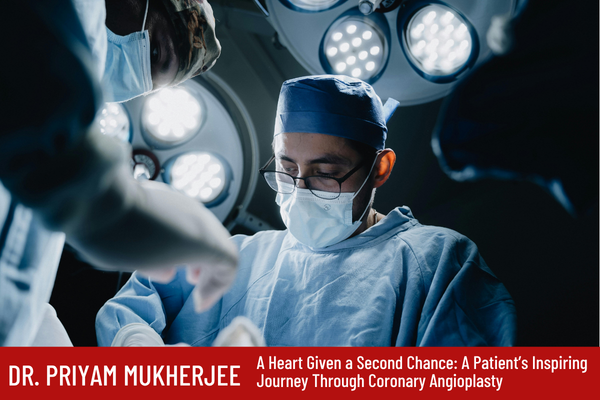
When Chest Pain Could No Longer Be Ignored
At 56, Mr. Suman Chatterjee had always believed he was “too busy” to worry about his health.
Between work, family responsibilities, and long hours at the office, regular health check-ups were often postponed.
One morning, while climbing a flight of stairs, he felt a tight pressure in the center of his chest.
He stopped for a few minutes.
The discomfort gradually settled.
He ignored it.
Over the following weeks, the chest pain returned more frequently.
Even short walks caused breathlessness.
One evening, while returning home, the pain became severe and spread to his left arm.
His family immediately rushed him to the hospital.
Following emergency evaluation, ECG, blood tests, and Coronary Angiography, doctors discovered significant blockage in one of his heart arteries.
He required Coronary Angioplasty.
Concerned about his condition, Suman consulted Dr. Priyam Mukherjee, an experienced Consultant Interventional Cardiologist, renowned for treating coronary artery disease using advanced minimally invasive cardiac procedures.
That decision became the beginning of his journey toward a healthier heart.
Understanding Coronary Angioplasty
Dr. Mukherjee patiently explained the condition and the treatment plan.
What is Coronary Angioplasty?
Coronary Angioplasty, also known as Percutaneous Coronary Intervention (PCI), is a minimally invasive procedure used to open narrowed or blocked coronary arteries that supply blood to the heart muscle.
During the procedure, a tiny balloon is used to widen the blocked artery, and in many cases, a coronary stent is placed to help keep the artery open.
The objective is to improve blood flow to the heart, relieve symptoms, and reduce the risk of future cardiac complications when clinically indicated.
Symptoms of Blocked Heart Arteries
Patients with Coronary Artery Disease may experience:
- Chest pain (Angina)
- Chest tightness
- Shortness of breath
- Pain radiating to the arm, jaw, neck, or back
- Fatigue during physical activity
- Sweating
- Dizziness
- Nausea
- Symptoms of a heart attack in severe cases
Some individuals, especially people with diabetes, may have only mild or atypical symptoms.
Common Risk Factors
Several factors increase the risk of coronary artery disease:
- High blood pressure
- Diabetes
- High cholesterol
- Smoking
- Obesity
- Physical inactivity
- Family history of heart disease
- Unhealthy diet
- Chronic stress
- Increasing age
Managing these risk factors plays an important role in protecting heart health.
The Emotional Impact of a Heart Diagnosis
For Suman and his family, hearing the words “heart blockage” was frightening.
He worried about:
- Heart attack
- Major surgery
- Returning to work
- Supporting his family
- His future health
- Living a normal life again
Dr. Mukherjee carefully explained every step of the treatment.
He reassured Suman that modern interventional cardiology offers effective minimally invasive treatment options for many patients with coronary artery disease.
His calm and compassionate guidance helped reduce fear and build confidence.
Comprehensive Cardiac Care with Dr. Priyam Mukherjee
Dr. Mukherjee believes that every heart patient deserves personalized, evidence-based treatment.
His comprehensive approach includes:
- Detailed cardiology consultation
- Clinical examination
- ECG
- Echocardiography
- Blood investigations
- Stress testing when appropriate
- Coronary Angiography
- Coronary Angioplasty when clinically indicated
- Coronary stent placement where appropriate
- Cardiac rehabilitation
- Lifestyle counseling
- Long-term cardiac follow-up
Every treatment plan is tailored according to the patient’s symptoms, coronary anatomy, overall health, and clinical condition.
Suman’s Personalized Treatment Journey
Following coronary angiography, Dr. Mukherjee recommended Coronary Angioplasty.
His Care Included:
- Emergency cardiac assessment
- ECG and blood investigations
- Coronary angiography
- Angioplasty with coronary stent placement when indicated
- Intensive cardiac monitoring
- Medication optimization
- Dietary counseling
- Cardiac rehabilitation
- Lifestyle modification
- Regular follow-up care
The goal was to restore blood flow, relieve symptoms, improve heart function, and help Suman safely return to his normal life.
Benefits of Timely Angioplasty
For appropriately selected patients, Coronary Angioplasty may provide several important benefits.
Potential Benefits Include:
- Improved blood flow to the heart
- Relief from chest pain (Angina)
- Reduced breathlessness
- Faster recovery compared with many open surgical procedures
- Improved exercise capacity
- Better quality of life
- Reduced risk of further heart damage in selected emergency situations
The most appropriate treatment depends on the number of blocked arteries, their location, and the patient’s overall condition.
Recovery Journey: Every Heartbeat Filled with Hope
Following the procedure, Suman carefully followed every recommendation from Dr. Mukherjee.
He stopped smoking.
He adopted a heart-healthy diet.
He began regular walking under medical guidance.
Within weeks, climbing stairs became easier.
Chest pain disappeared.
He gradually returned to work with renewed confidence.
More importantly, he realized that heart disease had taught him to value his health before it was too late.
Today, he enjoys spending quality time with his family while maintaining a healthier lifestyle.
Looking Toward a Stronger Future
Suman now encourages everyone not to ignore chest pain or breathlessness.
He reminds friends that early medical evaluation can save lives.
His story demonstrates that advanced interventional cardiology, combined with healthy lifestyle changes, can provide patients with a second chance at life.
Under the supervision of Dr. Priyam Mukherjee, Coronary Angioplasty became more than a cardiac procedure—it became the beginning of a healthier and more hopeful future.
Frequently Asked Questions (FAQs)
What is Coronary Angioplasty?
Coronary Angioplasty is a minimally invasive procedure that opens blocked or narrowed coronary arteries using a balloon catheter and, in many cases, a coronary stent to improve blood flow to the heart.
When is Angioplasty recommended?
Angioplasty may be recommended for patients with significant coronary artery blockages causing symptoms such as chest pain or during certain heart attacks, depending on clinical evaluation.
Is Angioplasty safer than open-heart surgery?
Angioplasty and coronary artery bypass surgery (CABG) are different procedures. The most appropriate treatment depends on the patient’s condition, number of blockages, and overall heart health.
How long does recovery take?
Many patients recover relatively quickly after angioplasty, although recovery time varies depending on the individual’s health and the reason for the procedure.
Will I need medications after Angioplasty?
Yes. Most patients require medications after angioplasty to help reduce the risk of future cardiac events. Your cardiologist will prescribe medicines based on your individual needs.
When should I consult a cardiologist?
Seek immediate medical attention if you experience chest pain, breathlessness, pain radiating to the arm or jaw, unexplained sweating, or symptoms suggestive of a heart attack.
Conclusion: A Healthy Heart Begins with Timely Care
Blocked heart arteries can be life-threatening, but advances in interventional cardiology have made treatment safer, faster, and more effective for many patients.
Under the expert supervision of Dr. Priyam Mukherjee, Consultant Interventional Cardiologist, patients receive comprehensive cardiac evaluation, advanced coronary angiography and angioplasty when indicated, personalized treatment planning, cardiac rehabilitation, and compassionate long-term heart care.
Suman’s inspiring recovery reminds us that chest pain should never be ignored. With early diagnosis, timely intervention, expert cardiac care, and healthy lifestyle changes, many patients can regain their strength, protect their heart, and enjoy many more healthy years with their loved ones.