Short Introduction
Coronary artery disease remains one of the leading causes of heart attacks and cardiovascular complications worldwide. While many coronary blockages can be treated with conventional angioplasty and stenting, some patients develop heavily calcified artery blockages that are difficult to treat using standard techniques.
Rotablation (Rotational Atherectomy) is an advanced interventional cardiology procedure that helps treat severely calcified coronary arteries, allowing successful angioplasty and stent placement in complex cases. This innovative technique has significantly improved outcomes for patients who may otherwise require more invasive treatment options.
Under the expert guidance of Dr. Priyam Mukherjee, patients receive comprehensive cardiac evaluation and advanced coronary interventions using the latest evidence-based technologies.
What is the Condition?
Coronary artery disease occurs when the arteries supplying blood to the heart become narrowed or blocked by fatty deposits, cholesterol, calcium, and plaque buildup.
Over time, some blockages become heavily calcified, making them rigid and difficult to treat with conventional balloon angioplasty alone.
What is Coronary Angioplasty?
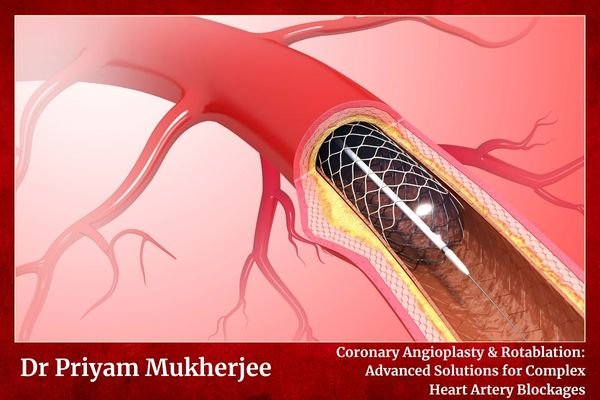
Coronary Angioplasty is a minimally invasive procedure used to open narrowed or blocked coronary arteries.
The procedure typically involves:
- Insertion of a catheter through the wrist or groin
- Inflation of a balloon within the blocked artery
- Placement of a coronary stent to keep the artery open
- Restoration of normal blood flow to the heart
What is Rotablation?
Rotablation (Rotational Atherectomy) is a specialized procedure used when coronary arteries contain severe calcium deposits.
A tiny diamond-coated rotating burr is used to carefully modify and break down calcified plaque, allowing subsequent balloon angioplasty and stent deployment.
When Should You Seek Treatment?
You should seek evaluation from a cardiologist if you experience symptoms suggestive of coronary artery disease.
Common Symptoms
- Chest pain (Angina)
- Chest heaviness or pressure
- Shortness of breath
- Fatigue during physical activity
- Pain radiating to the arm, neck, jaw, or back
- Dizziness
- Reduced exercise tolerance
Situations Where Rotablation May Be Recommended
- Severe calcified coronary artery blockages
- Failed balloon angioplasty attempts
- High-risk coronary lesions
- Elderly patients with calcified arteries
- Complex multivessel coronary artery disease
Seek Immediate Medical Attention If:
- Sudden chest pain develops
- Symptoms occur at rest
- Suspected heart attack symptoms are present
- Severe breathlessness develops
Why This Treatment is Recommended?
Benefits of Coronary Angioplasty
Restores Blood Flow
Improves oxygen supply to the heart muscle.
Relieves Symptoms
Reduces chest pain and breathlessness.
Prevents Heart Damage
Helps reduce the risk of future cardiac events.
Minimally Invasive
No major surgical incision is required.
Benefits of Rotablation
Treats Heavily Calcified Arteries
Allows treatment of blockages that are otherwise difficult to manage.
Facilitates Stent Placement
Improves the ability to properly expand and deploy stents.
Improves Long-Term Outcomes
Enhances procedural success in complex coronary interventions.
Reduces Need for Open-Heart Surgery
May provide a minimally invasive alternative for selected patients.
Advanced Treatment Approach
Modern cardiac intervention may involve:
- Coronary Angiography
- Intravascular Imaging (IVUS/OCT)
- Rotablation
- Balloon Angioplasty
- Drug-Eluting Stent Placement
- Physiological Assessment of Coronary Lesions
Risks and Complications
Although coronary angioplasty and rotablation are generally safe, potential risks may include:
Procedure-Related Risks
- Bleeding at the catheter insertion site
- Blood vessel injury
- Irregular heart rhythms
- Contrast allergy
- Kidney dysfunction (rare)
- Stent thrombosis
- Restenosis (re-narrowing)
Rotablation-Specific Risks
- Temporary slowing of blood flow
- Coronary artery dissection
- Coronary perforation (rare)
- Small particle embolization
Careful patient selection and expert procedural planning help minimize these risks.
Frequently Asked Questions (FAQ)
What is the difference between angioplasty and rotablation?
Angioplasty uses balloons and stents to open blocked arteries, while rotablation is used to modify heavily calcified plaques before angioplasty and stenting.
Is rotablation a surgery?
No. Rotablation is a minimally invasive catheter-based procedure performed through a small artery access site.
Who needs rotablation?
Patients with severe calcified coronary artery disease that cannot be adequately treated with standard angioplasty techniques.
Is the procedure painful?
Patients are usually awake but comfortable during the procedure. Local anesthesia is used at the access site.
How long does recovery take?
Most patients recover quickly and may return home within one or two days depending on their condition.
Can rotablation prevent a heart attack?
By improving blood flow and treating severe blockages, rotablation may help reduce the risk of future cardiac events.
Is rotablation safe in elderly patients?
Yes. Rotablation is frequently performed in elderly patients with heavily calcified coronary arteries when clinically appropriate.
About Dr. Priyam Mukherjee
Dr. Priyam Mukherjee
Consultant Interventional Cardiologist
MBBS, MD (Gold Medalist)
DM (Cardiology)
FSCAI, FESC, FACC
Dr. Priyam Mukherjee specializes in advanced coronary interventions, angioplasty, complex coronary artery disease management, intravascular imaging, structural heart interventions, and evidence-based cardiovascular care. With expertise in managing high-risk and calcified coronary lesions, he is dedicated to providing world-class cardiac treatment tailored to individual patient needs.
Call to Action (CTA)
Persistent chest pain, breathlessness, or known coronary artery disease should never be ignored. Early diagnosis and advanced cardiac intervention can prevent serious complications and improve long-term heart health.
Schedule a consultation with Dr. Priyam Mukherjee today for expert evaluation of coronary artery disease, advanced angioplasty, and specialized rotablation treatment. Timely intervention can protect your heart and help you lead a healthier life.